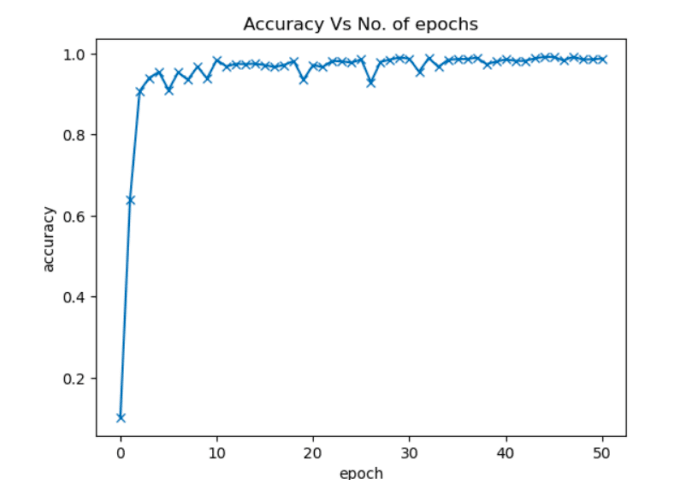
99.22%
Validation Accuracy
99.32%
F1 Score
Project Snapshot
Project Type
Deep Learning · Image Classification
Core Architecture
ResNet9
Dataset
State Farm Distracted Driver (Kaggle)
Key Metrics
Accuracy: 99.22% · F1: 99.32%
My Role
Research Intern
Supervisor
Prof. P. Rajalakshmi
Project Overview
The Challenge
Distracted driving is a significant contributor to road accidents globally. Effectively identifying and classifying these behaviors in real-time is crucial for enhancing road safety and developing preventative systems. This project addresses the challenge of accurately detecting various forms of driver distraction using computer vision techniques.
Our Solution
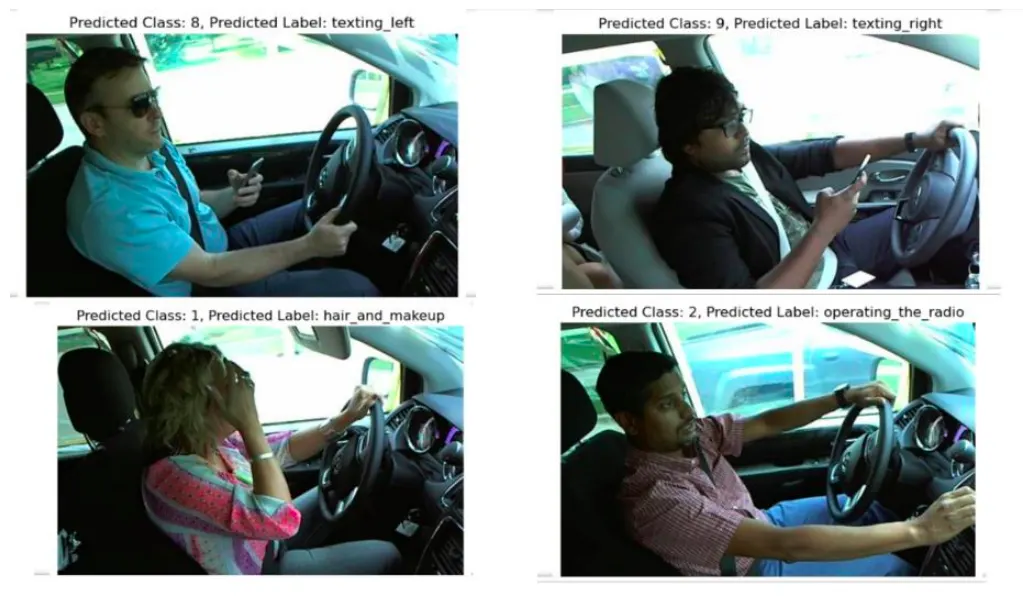
This project employs the ResNet9 deep learning architecture to classify ten distinct driver distraction classes from images. By leveraging the comprehensive State Farm Distracted Driver Detection dataset from Kaggle, and implementing robust image augmentation techniques, we developed a highly accurate and generalized model capable of contributing to safer driving environments.
Approach & Methodology
Deep Learning with ResNet9
Utilized the lightweight yet powerful ResNet9 architecture for its efficiency and ability to handle complex image features through skip connections, mitigating vanishing gradient issues.
Dataset & Preprocessing
Trained on the State Farm Distracted Driver Detection dataset comprising images across ten different driver behaviors (texting, talking on phone, safe driving, etc.).
Image Augmentation
Employed random rotation, cropping, and horizontal flipping to significantly enhance model robustness and generalization by exposing it to a wider variety of data.
Comparative Analysis (ResNet9 vs. ResNet50)
Conducted a comparative study demonstrating that ResNet9 achieves comparable high accuracy with a simpler architecture, making it suitable for deployment in resource-constrained environments.
Key Results & Visualizations
Technologies Used
Lessons Learned & Challenges
Data Imbalance
Addressing potential class imbalance within the dataset was crucial for achieving high and balanced performance across all distraction categories.
Overfitting Mitigation
Extensive use of image augmentation techniques proved vital in preventing overfitting, especially with a relatively smaller domain-specific dataset.
Architectural Choice
Demonstrating that ResNet9 achieves comparable results to much larger models (ResNet50) highlights the importance of selecting the right architecture — balancing accuracy with computational efficiency.
Impact of Skip Connections
Gained deeper understanding of how skip connections in ResNet effectively combat the vanishing gradient problem, enabling training of deeper networks.
Future Goals
Future work includes integrating the ResNet9 model into real-time distracted driver detection systems for smart vehicles and exploring additional deep learning architectures to further optimize performance and computational efficiency. Deployment on edge devices for in-car systems would be a valuable next step.
Read the Work
Published Research
This work has been published on ResearchGate. Read the full thesis.